
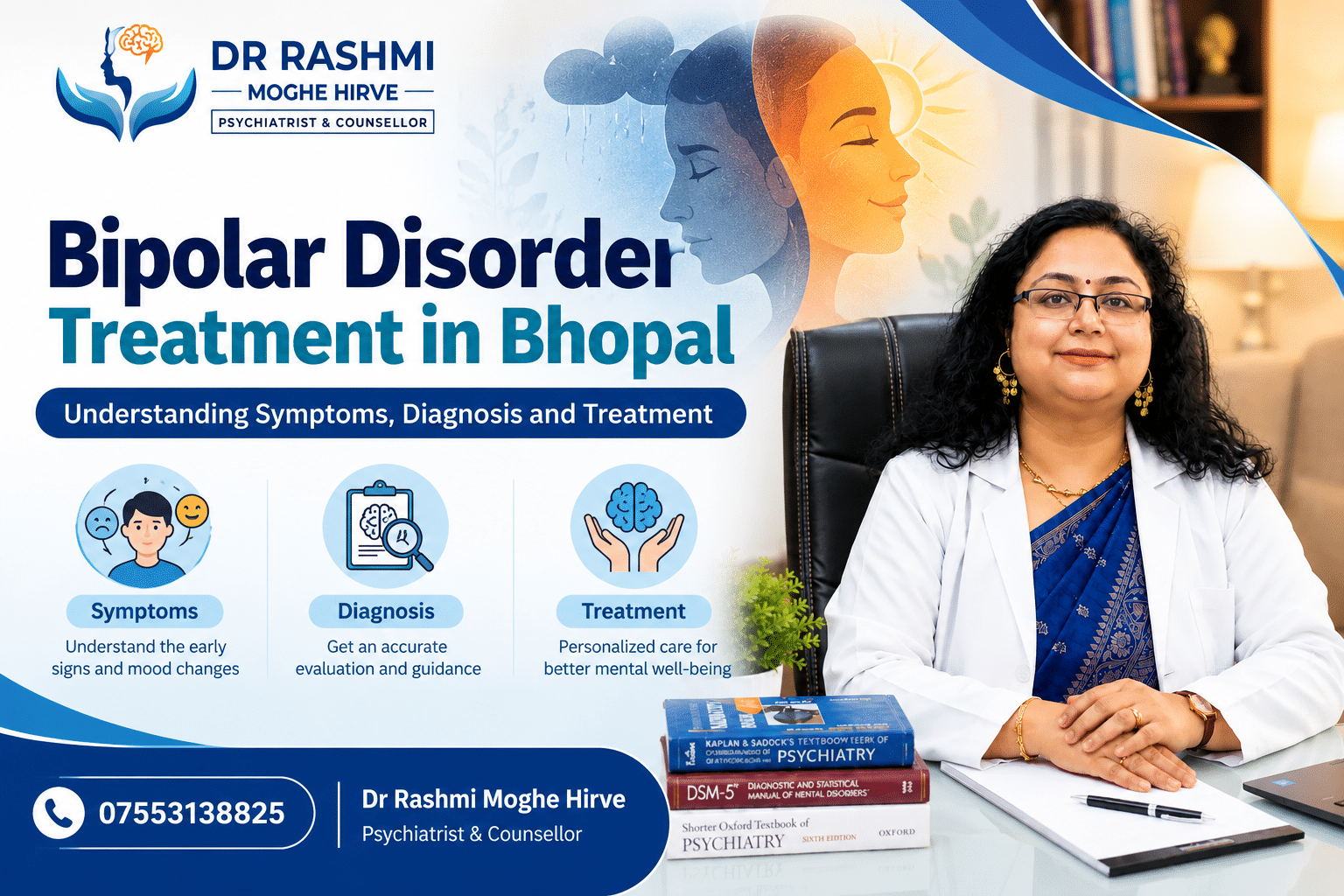
Bipolar disorder is a mental health condition that causes significant changes in mood, energy, activity levels, and the ability to manage everyday responsibilities. Individuals may experience episodes of depression and periods of elevated mood, increased energy, or irritability. These changes can affect relationships, work, education, sleep, and overall quality of life. Understanding the symptoms, diagnosis, and available treatment options is an important step toward managing this condition. Bipolar Disorder Treatment in Bhopal focuses on identifying mood patterns, understanding individual needs, and developing a personalized treatment plan with professional support.
Dr. Rashmi Moghe Hirve, an experienced psychiatrist and counsellor in Bhopal with over 18 years of experience in mental health care, provides psychiatric evaluation, counselling, and personalized treatment for various mental health conditions. Her patient-centred approach emphasizes compassionate care, accurate assessment, and ongoing support.
What Is Bipolar Disorder?
Bipolar disorder is a mental health condition characterized by episodes of depression and mania or hypomania. These episodes involve noticeable changes in mood, energy, activity, sleep, and behaviour that differ from a person’s usual functioning. Mania involves an unusually elevated, expansive, or irritable mood with increased energy and activity. Hypomania involves similar symptoms but is less severe than mania. Depressive episodes may involve persistent sadness, reduced interest in activities, low energy, and difficulty concentrating. The type and severity of symptoms vary between individuals. A professional assessment helps determine the nature of the condition and whether Bipolar Disorder Treatment in Bhopal may be appropriate.
What Are the Common Symptoms of Bipolar Disorder?
Bipolar disorder can affect people differently. Some individuals experience clear episodes of elevated mood and depression, while others may initially notice changes in sleep, energy, concentration, or behaviour.
1. Symptoms of Mania or Hypomania
During manic or hypomanic episodes, a person may experience:
- Unusually elevated or irritable mood
- Increased energy and activity
- Reduced need for sleep without feeling tired
- Rapid speech or racing thoughts
- Increased confidence or feelings of unusual importance
- Distractibility and difficulty focusing
- Impulsive spending or risky decision-making
Mania can significantly disrupt daily functioning and may sometimes require urgent medical care.

2. Symptoms of Bipolar Depression
Depressive episodes may include:
- Persistent sadness or hopelessness
- Loss of interest in previously enjoyable activities
- Low energy or fatigue
- Changes in sleep or appetite
- Difficulty concentrating or making decisions
- Feelings of guilt or worthlessness
- Withdrawal from family, friends, or social activities
If these symptoms persist or interfere with everyday life, consulting a qualified Bipolar Disorder Doctor in Bhopal can help clarify the underlying cause.
3. Changes in Daily Behaviour
Family members may notice changes in sleep patterns, communication, decision-making, social interaction, or productivity. These changes do not automatically mean someone has bipolar disorder, but recurring episodes deserve professional assessment.
What Causes Bipolar Disorder?
There is no single cause of bipolar disorder. Research suggests that a combination of biological, genetic, and environmental factors may contribute to its development.
Genetic Factors
Bipolar disorder can occur more frequently in people with a family history of the condition. However, having an affected family member does not mean that someone will necessarily develop it.
Brain Function and Biological Factors
Differences in brain function and the systems that regulate mood, sleep, and activity may contribute to bipolar disorder. The condition is complex and cannot be explained by a single chemical imbalance.
Stress and Life Events
Major life changes, prolonged stress, sleep disruption, and other environmental factors may contribute to mood episodes in susceptible individuals. These factors are not the sole cause of bipolar disorder, but they can influence symptom patterns.
Substance Use and Sleep Disruption
Alcohol, recreational substances, and severe sleep disruption can worsen mood symptoms or trigger episodes in some individuals. Discussing these factors openly with a mental health professional can support safer treatment planning.
When Should You Consult a Psychiatrist?
It is important to seek professional assessment when mood changes become intense, recurring, or disruptive to daily life.
Consider consulting a Bipolar Disorder Doctor in Bhopal if you or a family member experiences repeated periods of unusually elevated energy, reduced need for sleep, impulsive behaviour, persistent depression, or significant changes in functioning.
Professional support is especially important when symptoms affect relationships, education, work, financial decisions, or personal safety.
Seek urgent help if a person has suicidal thoughts, cannot care for themselves, experiences severe confusion, or behaves in a way that creates immediate danger. If there is an immediate risk of harm, contact local emergency services or go to the nearest emergency department.
How Is Bipolar Disorder Diagnosed?
There is no single blood test or brain scan that can independently confirm bipolar disorder. Diagnosis usually involves a detailed psychiatric assessment and an understanding of the person’s symptoms over time.
Psychiatric Evaluation
A psychiatrist may ask about mood changes, sleep, energy levels, behaviour, personal history, family history, medications, and the impact of symptoms on everyday life.
Review of Mood Episodes
The duration, frequency, and severity of elevated and depressive episodes help the clinician understand the pattern of symptoms. Information from a trusted family member may sometimes be helpful, with the person’s consent where appropriate.
Assessment of Other Conditions
Certain medical conditions, medications, substance use, and other mental health disorders can cause symptoms that resemble bipolar disorder. Additional medical tests may be recommended when clinically necessary. A careful evaluation helps distinguish bipolar disorder from other conditions and guides individualized Bipolar Disorder Treatment in Bhopal.
What Are the Treatment Options for Bipolar Disorder?
Bipolar disorder is a long-term condition, but appropriate treatment can help many people manage symptoms, reduce the risk of future episodes, and improve daily functioning. Treatment is personalized according to the type and severity of symptoms, medical history, previous treatment response, and individual circumstances.
1. Medication Management
Medication is often an important component of bipolar disorder treatment. Depending on the diagnosis and current symptoms, a psychiatrist may consider mood stabilizers or certain antipsychotic medications. Treatment for depressive episodes requires careful selection because some antidepressants can trigger mania or mood instability in certain people. Medication should only be prescribed and monitored by a qualified clinician. Patients should not start, stop, or change psychiatric medication without medical guidance.
2. Psychotherapy and Counselling
Psychotherapy can help individuals understand their symptoms, recognize early warning signs, manage stress, and develop healthier coping strategies. Depending on the person’s needs, therapy may include cognitive behavioural approaches, family-focused interventions, psychoeducation, or interpersonal and social rhythm strategies.
3. Sleep and Lifestyle Management
Maintaining a consistent sleep schedule, following regular daily routines, exercising appropriately, and avoiding alcohol or recreational substances may support treatment. These measures complement professional care but should not replace prescribed medication or psychiatric follow-up when these are needed.
4. Ongoing Monitoring
Regular follow-up appointments help assess symptom changes, medication effectiveness, side effects, and possible warning signs of a new episode. Consistent monitoring is an important part of Bipolar Disorder Treatment in Bhopal, particularly for individuals who have experienced recurring mood episodes.
Can Bipolar Disorder Be Managed Successfully?
Many people with bipolar disorder can lead fulfilling lives with appropriate treatment and ongoing support. Outcomes vary depending on individual circumstances, symptom severity, treatment response, and access to care. Recognizing early warning signs, following the treatment plan, maintaining regular sleep, and attending follow-up appointments can help reduce the risk of relapse.
Family education can also be valuable. Relatives may learn how to recognize changes in mood or behaviour and encourage treatment without blame or stigma. A personalized approach to Bipolar Disorder Treatment in Bhopal can help individuals work toward greater stability, improved relationships, and better day-to-day functioning.
Why Choose the Best Psychiatrist Near Gulmohar Colony, Bhopal?
When looking for a Best Psychiatrist in near Gulmohar Colony, Bhopal, it is important to consider professional qualifications, clinical experience, communication, confidentiality, and the availability of follow-up care.
Dr. Rashmi Moghe Hirve has over 18 years of experience in mental health care and provides psychiatric evaluation, counselling, and psychotherapy for a range of psychological and behavioural concerns.
Her qualifications include:
- M.B.B.S. (Gold Medalist)
- D.N.B. Psychiatry
- P.G.D. in Counselling & Family Therapy
- P.G.D. in Mental Health
- Certification in Career Counselling (GCC UCLA)
Her areas of practice include anxiety, depression, obsessive-compulsive disorder, bipolar disorder, schizophrenia, stress-related concerns, sleep difficulties, and other mental health conditions.
For individuals exploring Bipolar Disorder Treatment in Near Gulmohar Colony Bhopal, a consultation can help establish whether their symptoms require further assessment and what treatment options may be suitable.

How Family Support Helps During Bipolar Disorder Treatment in Bhopal
Family members and caregivers play an important role in supporting individuals undergoing Bipolar Disorder Treatment in Bhopal. A calm, understanding, and supportive environment can help individuals manage mood changes, follow treatment recommendations, and improve their overall quality of life.
With guidance from a Bipolar Disorder Doctor in Bhopal, families can learn how to recognize symptoms and provide appropriate support.
Helpful approaches include:
- Encouraging regular psychiatric appointments and follow-ups.
- Supporting consistent sleep patterns and daily routines.
- Recognizing changes in mood, energy, and behaviour.
- Communicating with patience, understanding, and without judgement.
- Encouraging medication adherence as advised by the treating psychiatrist.
- Seeking professional help if symptoms worsen or safety concerns arise.
Family involvement should always respect the individual’s privacy, dignity, and independence. With appropriate counselling and psychoeducation, families can better understand bipolar disorder and support long-term treatment.
FAQs – Bipolar Disorder Treatment in Bhopal
1. What Are the Early Signs of Bipolar Disorder?
Early signs may include unusually elevated or irritable moods, reduced need for sleep, increased activity, impulsive decisions, and episodes of depression. Recognising these symptoms early can help individuals seek appropriate Bipolar Disorder Treatment in Bhopal. A qualified psychiatrist can assess the symptoms and determine whether they are related to bipolar disorder or another condition.
2. Can Bipolar Disorder Be Treated?
Yes, bipolar disorder can often be managed with an individualised treatment plan involving medication, psychotherapy, lifestyle strategies, and regular follow-up. Bipolar Disorder Treatment in Bhopal focuses on managing mood episodes, improving daily functioning, and supporting long-term stability. Treatment plans vary according to each person’s symptoms and response to care.
3. Does Everyone With Bipolar Disorder Need Medication?
Medication is commonly recommended for bipolar disorder, but the appropriate treatment depends on the individual’s diagnosis, symptoms, and medical history. A Bipolar Disorder Doctor in Bhopal can explain the available options, potential benefits, and possible side effects. Medication should never be stopped or changed without consulting the treating psychiatrist.
4. How Long Does Bipolar Disorder Treatment Take?
Bipolar disorder is generally a long-term condition that requires ongoing management. With appropriate Bipolar Disorder Treatment in Bhopal, some symptoms may improve over weeks, while maintaining mood stability often requires continued treatment and monitoring. Regular psychiatric follow-ups help assess progress and adjust the treatment plan when necessary.
5. When Should I Consult a Bipolar Disorder Specialist?
Consider consulting a specialist if recurring mood changes, sleep disturbances, impulsive behaviour, or depressive symptoms interfere with work, relationships, or everyday activities. An experienced Bipolar Disorder Doctor in Bhopal can conduct a detailed assessment and recommend suitable care. Seek urgent medical assistance if symptoms create an immediate risk of harm to yourself or others.
6. Can Counselling Help With Bipolar Disorder?
Yes, counselling and structured psychotherapy can help individuals recognise mood changes, manage stress, improve coping skills, and follow their treatment plans. As part of Bipolar Disorder Treatment in Bhopal, psychotherapy is often combined with medication when clinically appropriate. Regular sessions can also help patients and their families better understand the condition and identify early warning signs.
Conclusion: Bipolar Disorder Treatment in Bhopal for Better Mental Health
Bipolar disorder can affect mood, sleep, energy, relationships, and everyday functioning. Recognizing the symptoms and obtaining an accurate diagnosis are important steps toward effective management.
The right Bipolar Disorder Treatment in Bhopal depends on the individual’s symptoms, medical history, treatment response, and personal needs. Psychiatric care may include medication, psychotherapy, lifestyle management, and regular follow-up to help reduce the risk of recurring episodes.
If you or someone close to you is experiencing significant mood changes, persistent depression, or periods of unusually elevated energy, consider seeking professional assessment. With appropriate care, ongoing support, and a personalized treatment plan, people living with bipolar disorder can work toward improved stability and quality of life.